
The Best Fluffy Pancakes recipe you will fall in love with. Full of tips and tricks to help you make the best pancakes.

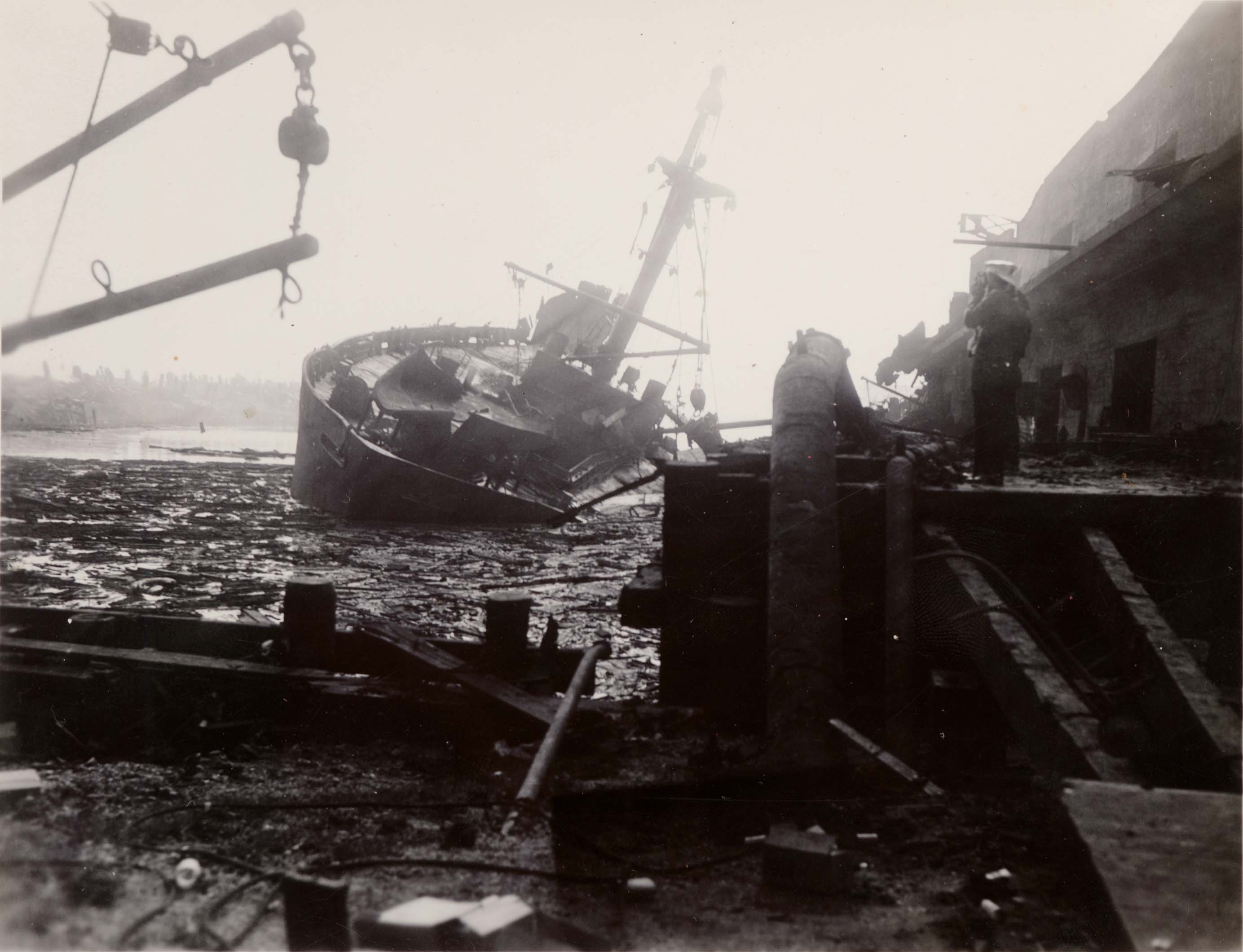
The Texas City disaster of 1947 began as a shipboard fire and ended as the deadliest industrial accident in US history. At 9:12 a.m. on April 16, the SS Grandcamp detonated with roughly 2,100 metric tons (about 2,300 short tons) of ammonium nitrate fertilizer aboard, killing an estimated 581 people and flattening the Texas City docks.
TL;DR — What Was the Texas City Disaster of 1947?
The Texas City disaster of 1947 was a two-stage explosion sequence at the port of Texas City, Texas, triggered by a fire in the cargo hold of the French freighter SS Grandcamp. The ship carried ammonium nitrate fertilizer. When it went off at 9:12 a.m. on April 16, it killed roughly 581 people and set off a chain of fires that destroyed a second ship sixteen hours later. It remains the worst industrial accident the country has recorded (Source: Britannica).
The short version: a common fertilizer, mishandled and confined, behaved like a bomb. The longer version is a lesson in chemistry that changed how the world stores ammonium nitrate.
Table of contents
The Morning the Docks Caught Fire
Around 8 a.m. on April 16, 1947, longshoremen loading the Grandcamp noticed smoke rising from a lower hold packed with sacks of fertilizer-grade ammonium nitrate, known as FGAN. Someone had likely dropped a cigarette or a match. Within an hour the fire would kill nearly everyone standing on that dock.
The Grandcamp was a wartime Liberty ship, French-flagged, tied up at the Texas City terminal in Galveston Bay. She was taking on FGAN bound for farms in Europe as part of a postwar effort to rebuild agriculture on the continent (Source: Justia). The cargo mattered. FGAN wasn’t loose chemical — it was granulated ammonium nitrate coated to keep it from clumping, bagged in paper sacks, and stacked belowdecks by the thousands.
The crew tried to fight the fire the way you’d fight most fires: they wanted to drown it. But the captain didn’t want seawater ruining the cargo. So they battened down the hatches and pumped in steam instead, hoping to smother the flames without soaking the fertilizer. That decision, reasonable on its face, turned the hold into a sealed pressure cooker.
Spectators gathered along the waterfront to watch the orange-tinted smoke. Many were children on their way to school. None of them understood what was cooking a few dozen yards away.
Two Explosions, Sixteen Hours Apart
Texas City suffered two separate detonations, not one. The Grandcamp blew first, at 9:12 a.m. on April 16. Her burning wreckage and the surrounding fires then cooked off a second ship, the SS High Flyer, at 1:10 a.m. the next morning. The second blast was arguably the larger single explosion, though by then most survivors had been evacuated (Source: Texas City official history, texascitytx.gov).
| Ship | Cargo | AN tonnage (metric / short) | Sensitizer | Ignition | Force |
|---|---|---|---|---|---|
| SS Grandcamp | FGAN ammonium nitrate | ~2,100–2,200 t / ~2,300 short tons | Bunker fuel oil + wax/rosin/clay anti-caking coating | 9:12 a.m., Apr 16, 1947 | Leveled the dock and the adjacent Monsanto chemical plant; hurled a 1.5-ton anchor over a mile |
| SS High Flyer | Ammonium nitrate + sulfur | ~872–961 t / ~961 short tons AN, plus ~1,800 t (2,000 short tons) sulfur | Sulfur sensitization | 1:10 a.m., Apr 17, 1947 | A larger single blast; had drifted into the neighboring Wilson B. Keene, which was also destroyed |
Tonnage estimates vary across the official reports; the range above reflects that spread rather than a single settled figure (Source: UNT Digital Library, US Coast Guard report; Wikipedia, “Texas City disaster”).
The Grandcamp Fire and the Steam Decision
The single choice that doomed the ship was injecting steam into a sealed hold. Closing the hatches trapped heat and pressure; the steam added more of both. Instead of starving the fire, the crew fed a chemical reaction that doesn’t need to be starved of oxygen to stop — because it makes its own.
By around 9 a.m. the hatch covers were bulging and the water around the hull was reportedly boiling. Tugboat crews trying to tow the Grandcamp away from the dock never got the chance. At 9:12 the ship disintegrated. The shockwave knocked two small planes out of the sky, shattered windows in Houston 40 miles off, and registered on seismographs in Denver (Source: NOAA, response.restoration.noaa.gov).
Chain Reaction — Monsanto and the High Flyer
The Grandcamp’s blast didn’t stay on the water. It leveled the Monsanto Chemical plant next to the terminal, where hundreds were at work, and ignited storage tanks holding oil and chemicals across the port. Burning debris rained down for a mile in every direction.
Two ships over sat the High Flyer, loaded with more ammonium nitrate and a large quantity of sulfur. Fires and flying wreckage from the first explosion set her smoldering. Crews spent the day trying to reach and tow her, but she was too entangled with a neighboring freighter to move. At 1:10 a.m. on April 17 she went up too, in what many witnesses judged an even bigger flash than the Grandcamp.
Why Did Ammonium Nitrate Explode?
Ammonium nitrate exploded because it is an oxidizer that decomposes exothermically without needing outside air — and both ships gave it exactly the conditions it needs to run away: heat, confinement, and organic fuel mixed in. This is the part most retellings get wrong, so it’s worth being precise.
An Oxidizer That Needs No Outside Air
Ammonium nitrate (NH4NO3) carries its own oxygen inside the molecule. That’s the whole point of it as a fertilizer and, unfortunately, as an explosive. When you heat it past a threshold, it decomposes on its own, releasing heat and gas — and because the oxygen for the reaction comes from within the compound, smothering it with steam or piling it into a sealed space doesn’t stop it. It accelerates it.
Here’s the correction worth flagging. A popular version of the story says the injected steam “converted the ammonium nitrate into nitrous oxide” and that’s what blew up. That framing is loose to the point of being wrong. What actually happened is a confined, self-sustaining exothermic decomposition: the sealed hold trapped heat so the reaction couldn’t shed energy, pressure climbed, temperature climbed, and the decomposition ran faster until it crossed into detonation. Nitrous oxide is one product of AN breakdown, but it wasn’t a magic conversion step — the killer was heat plus confinement plus a self-oxidizing solid (Source: HeinOnline blog, 2025; Fire Engineering).
The ANFO Problem: Bunker Oil and a Wax Coating
Pure ammonium nitrate is hard to set off. Mix in a bit of fuel and it becomes a mining explosive — that combination is literally called ANFO, ammonium nitrate/fuel oil, and it’s still one of the most widely used industrial blasting agents in the world. The Grandcamp was carrying an accidental ANFO recipe.
Two fuel sources were baked in. The ship’s own bunker fuel oil was nearby, and the FGAN itself was coated to stop the granules from caking together in humid holds. That anti-caking coating was a mix of wax, rosin, and clay (a petroleum derivative in the mix, essentially an organic film wrapped around each granule). So every sack held an oxidizer pre-blended with its own fuel. Heat that, confine it, and you’ve built a low-order explosive by accident (Source: FireRescue1; HeinOnline, 2025).
Sulfur and the Second Ship
The High Flyer added a different accelerant: sulfur. She held roughly 961 short tons of ammonium nitrate alongside about 2,000 short tons of sulfur. Sulfur acts as a sensitizer — it lowers the energy needed to kick ammonium nitrate into decomposition and makes the resulting blast more violent. That mixture is part of why the second explosion, despite less AN than the Grandcamp, is often described as the more powerful of the two (Source: Wikipedia, “Texas City disaster”; UNT Digital Library report).
The Human Toll
The official count settled at roughly 581 dead, and even that number carries an asterisk — 405 bodies were identified, 63 were recovered but never named, and 113 people were listed as missing and presumed vaporized or unrecoverable (Source: Wikipedia, “Texas City disaster”). Thousands more were injured. For a town of about 16,000 people, the losses reached into nearly every family.
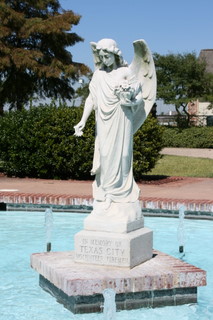
The volunteer fire department was gutted. When the Grandcamp caught fire, the town’s firefighters went to the dock to fight it, exactly as trained. All but one of the roughly 27 who responded were killed in the 9:12 blast. Texas City lost almost its entire firefighting force in a single second.
A monument now stands over a mass grave holding the unidentified dead. The disaster orphaned children, erased whole crews of dockworkers, and injured people miles inland from flying glass and debris.
Who Pays? Dalehite v. United States
The survivors sued the federal government, and they lost. Because the ammonium nitrate had been manufactured and shipped under a US government program, victims argued Washington was negligent at every step — in the formula, the coating, the bagging, the labeling, and the fire response. The litigation became the first mass tort action against the United States under the 1946 Federal Tort Claims Act (Source: Justia, Dalehite v. United States, 346 U.S. 15 (1953)).
The test case, Dalehite v. United States, reached the Supreme Court in 1953. By a 4–3 vote, the Court ruled the government immune. The majority leaned on the FTCA’s “discretionary function” exception, which shields the government from liability for policy-level judgment calls — and the Court treated the decisions about how to produce and ship the FGAN as exactly those kinds of high-level choices, not ordinary negligence (Source: Cornell Legal Information Institute, 346 U.S. 15).
The courthouse door was closed, so Congress opened another. Lawmakers passed a relief act to compensate victims directly, and by 1957 the government had paid roughly 1,394 awards totaling about $17 million (Source: Wikipedia, “Texas City disaster”). Dalehite still shapes how far you can sue the federal government today.
What Changed After Texas City
Texas City rewrote the rulebook on ammonium nitrate. The disaster exposed that a routine agricultural product was being coated with fuel, bagged in flammable paper, stacked in sealed holds, and shipped with almost no hazard labeling. Reforms followed on several fronts.
Manufacturers moved away from the wax-and-rosin coating that turned FGAN into an accidental explosive, and handling rules began treating ammonium nitrate as the oxidizer it is rather than as inert fertilizer. Storage and transport guidance tightened: separation from fuels and combustibles, ventilation instead of confinement, and clearer labeling of the hazard. Port firefighting changed too — the reflex to smother a fertilizer fire in a sealed hold, the exact move that killed the Grandcamp’s rescuers, was recognized as lethal. The lesson that you fight an oxidizer fire with flooding water and distance, not steam and closed hatches, was paid for in lives.
Emergency response also shifted. Texas City is often cited as a catalyst for coordinated industrial disaster planning in the US, given how completely the town’s own capacity was wiped out in the first blast.
Oppau, Halifax, Beirut: The Ammonium-Nitrate Lineage
Texas City sits in the middle of a grim family tree of ammonium nitrate catastrophes that spans a century. The same chemistry keeps producing the same result whenever the compound is stored in bulk near fuel or heat.
The pattern started loudly at Oppau, Germany. In the Oppau explosion of 1921, workers used dynamite to break up a caked pile of ammonium sulfate–nitrate at a BASF plant; the blast killed more than 500 people and proved the “safe” fertilizer could detonate. Texas City in 1947 was the same lesson at sea, with a fuel-oil twist. Then came Beirut in August 2020, when roughly 2,750 tons of ammonium nitrate stored in a port warehouse for years caught fire and exploded, killing more than 200 and gutting the Lebanese capital — a near-exact rhyme with Texas City, decades later.
The broader lineage of catastrophic port and industrial explosions runs deeper still. The Halifax Explosion of 1917 — a munitions ship detonating in a harbor — remains one of the largest accidental blasts before the nuclear age, and disasters like the Great Molasses Flood of 1919 showed how quickly a bulk storage failure can kill in a dense urban port. Different cargoes, same underlying failure: hazardous material, stored casually, in the middle of a city.
If there’s one takeaway worth holding onto, it’s this. Ammonium nitrate is not dangerous because it’s exotic. It’s dangerous because it’s ordinary — cheap, everywhere, and easy to treat as harmless right up until it isn’t.
Frequently Asked Questions
What caused the Texas City disaster of 1947?
A fire broke out around 8 a.m. on April 16 in a cargo hold of the SS Grandcamp, which was loaded with ammonium nitrate fertilizer. The crew sealed the hatches and injected steam to save the cargo, which trapped heat and pressure and triggered a confined chemical detonation at 9:12 a.m.
How many people died in the Texas City disaster?
Roughly 581 people were killed, making it the deadliest industrial accident in US history. Of those, 405 bodies were identified, 63 were recovered but never named, and 113 people were listed as missing. Thousands more were injured in a town of about 16,000.
What ships exploded at Texas City?
Two ships detonated. The SS Grandcamp exploded first at 9:12 a.m. on April 16, 1947, carrying ammonium nitrate. The SS High Flyer, loaded with more ammonium nitrate plus about 2,000 short tons of sulfur, exploded sixteen hours later at 1:10 a.m. on April 17.
Why is ammonium nitrate explosive?
Ammonium nitrate is an oxidizer that carries oxygen within its own molecule, so it decomposes exothermically without needing outside air. When heated and confined, it releases heat and gas faster than it can shed them, which can run away into detonation — especially when mixed with fuel or sulfur.
Was Texas City the deadliest US industrial accident?
Yes. With roughly 581 deaths, the Texas City disaster of 1947 is recognized as the worst industrial accident in United States history. It also ranks among the largest non-nuclear explosions ever recorded, based on the energy released by the Grandcamp’s cargo.
What was Dalehite v. United States?
Dalehite v. United States (346 U.S. 15, 1953) was the first mass tort lawsuit against the federal government under the Federal Tort Claims Act. The Supreme Court ruled 4 to 3 that the government was immune, citing the FTCA’s discretionary-function exception. Congress later compensated victims by legislation.
How did Texas City compare to Beirut or Hiroshima?
Texas City and Beirut (2020) were both bulk ammonium nitrate explosions of comparable scale, killing hundreds each. Neither approached a nuclear weapon. The Hiroshima bomb released energy thousands of times greater; comparisons to nuclear blasts describe the shock, not the actual yield.
What is FGAN?
FGAN stands for fertilizer-grade ammonium nitrate. It’s granulated ammonium nitrate coated to prevent caking in storage. At Texas City the coating used wax, rosin, and clay — an organic film wrapping an oxidizer, which effectively pre-mixed the fertilizer with its own fuel and made it far easier to ignite.
Sources
- Texas City disaster — Wikipedia: en.wikipedia.org/wiki/Texas_City_disaster
- Texas City explosion of 1947 — Britannica: britannica.com
- First Explosion — City of Texas City: texascitytx.gov
- Science Prevented a Second Texas City Disaster — NOAA: response.restoration.noaa.gov
- The Explosion That Destroyed Texas City — HeinOnline Blog (2025): heinonline.com
- Explosions of Ammonium Nitrate Fertilizer, Grandcamp and High Flyer — UNT Digital Library: digital.library.unt.edu
- Dalehite v. United States, 346 U.S. 15 (1953) — Justia: supreme.justia.com
- Dalehite v. United States — Cornell Legal Information Institute: law.cornell.edu