
The Best Fluffy Pancakes recipe you will fall in love with. Full of tips and tricks to help you make the best pancakes.

Who really destroyed the Library of Alexandria? No one person did, and no single fire wiped it out in an afternoon. The Library died slowly over roughly 400 years — Caesar’s 48 BCE fire was overstated, the 642 CE “Caliph Omar” story is a medieval invention, and the heaviest blows were Roman military destruction in the 270s CE and centuries of collapsing royal funding.
So Who Actually Destroyed the Library of Alexandria?
The honest answer disappoints people who want a villain. There is no arson smoking gun, no single date to circle. The Library of Alexandria was a research institution attached to the royal court, and it decayed the way institutions decay: funding dried up, scholars stopped being appointed, buildings got caught in wars, and the collection scattered. By the time anyone thought to write a dramatic “burning” story, the place had been effectively dead for centuries.
Most of the famous culprits either did far less damage than the legend claims or never happened at all. Below, each suspect gets weighed against what the surviving sources actually say — Strabo, Ammianus Marcellinus, Plutarch, and the medieval writers who invented the parts that aren’t true.
There Was No Single Culprit — Here’s the Short Version
No individual burned the Library of Alexandria to the ground. Historians now treat its loss as a slow institutional death across four centuries, punctuated by war damage. When you line up the five events people blame, only two did meaningful harm, and neither matches the “one great fire” image.
The five suspects, ranked by how much the evidence actually supports them:
- Julius Caesar’s fire — 48 BCE — Overstated. A real fire during his civil war reached the harbor district, but Strabo used the Library decades later. It survived.
- The Serapeum’s destruction — 391 CE — Overstated, likely a myth. A pagan temple with a book collection was demolished, but no source from the event mentions a library or scrolls.
- Roman military destruction — 270s–290s CE — Contributed, and underrated. Aurelian razed the Bruchion palace quarter where the Library sat. This is the prime physical suspect almost no one names.
- Caliph Omar’s order — 642 CE — A myth. First recorded around 500 years after the fact, and demonstrably invented for a later political purpose.
- Neglect — c. 3rd century CE onward — The real killer. Royal patronage collapsed, and appointments to the Mouseion stopped. No funding, no library.
What the Library Actually Was
The Library was one wing of the Mouseion, a royal research institute founded in Alexandria under the early Ptolemies in the 3rd century BCE — likely begun by Ptolemy I Soter and expanded by his son Ptolemy II Philadelphus. Think of it less as a public library and more as a state-funded think tank.
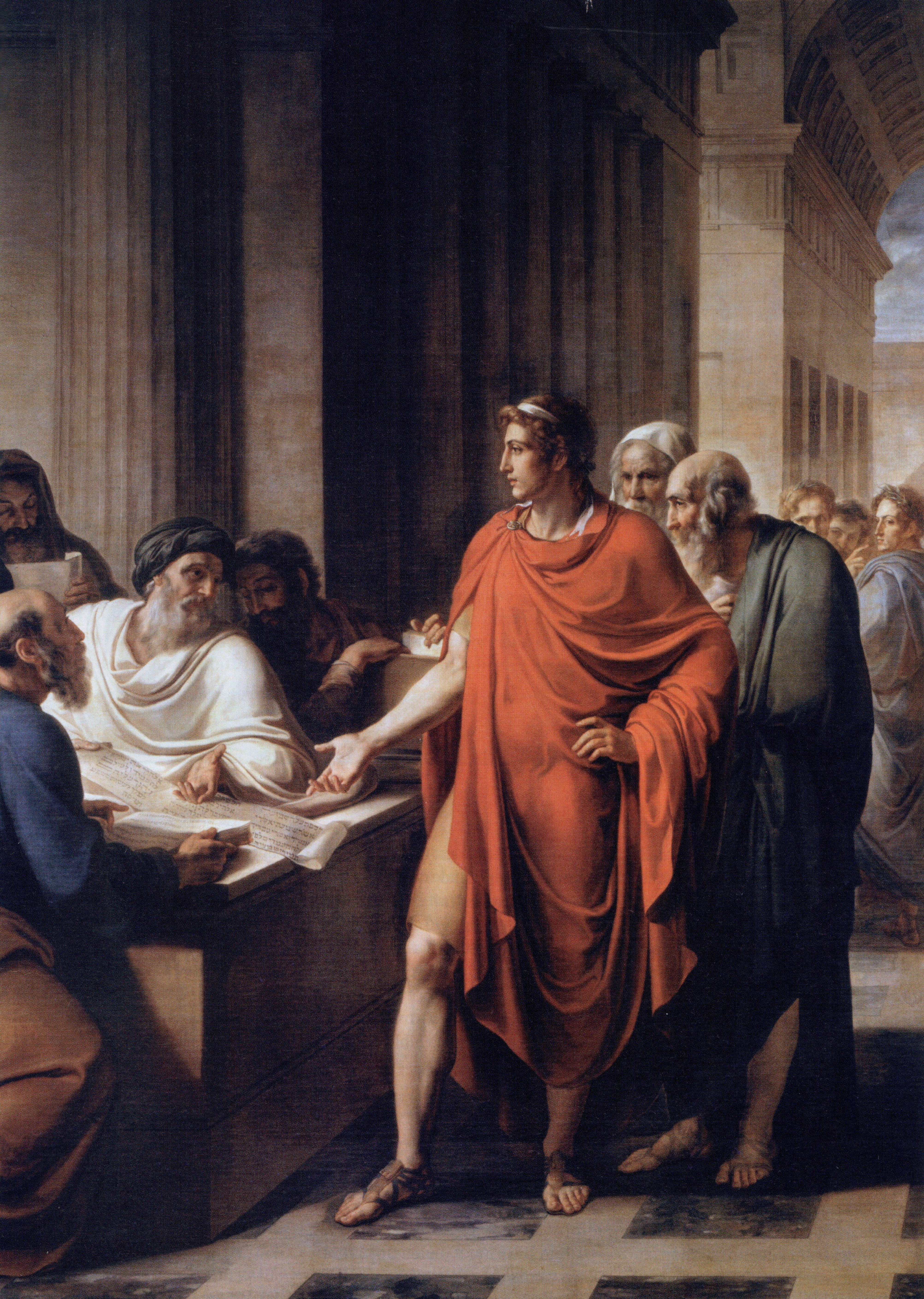
Scholars lived on the palace grounds, drew a salary from the crown, ate at a common table, and worked on everything from geometry to editing Homer. The collection existed to serve them. That detail matters for the whole mystery: because the Library depended on royal money and royal favor, it was only ever as healthy as the dynasty paying for it. This wasn’t a civic institution the city would fight to preserve. It was the king’s project — and kings change.
Alexandria itself had been founded by Alexander the Great in 331 BCE, and the Ptolemies who inherited Egypt after his death built the Mouseion partly as a prestige monument to that legacy.
The Usual Suspects — What the Evidence Says
Here is every commonly blamed event set against the historical record. Read the “verdict” column first, then the H3s below unpack the two suspects that actually matter.
| Blamed event | Date | Popular claim | What the evidence shows | Verdict |
|---|---|---|---|---|
| Julius Caesar’s fire | 48 BCE | Caesar burned the Library to ash during the Alexandrian War | Fire spread from the docks; Strabo researched from the Library ~20 BCE, and scholar Didymus kept producing work after. Warehoused scrolls near the harbor likely burned, not the Library | Real but overstated |
| Destruction of the Serapeum | 391 CE | A Christian mob under Bishop Theophilus destroyed the Library | The temple was demolished per Theodosius I’s anti-pagan edict, but no surviving account of the 391 event mentions books or a library | Overstated, probably a myth |
| Roman military destruction | 270s–290s CE | (Rarely blamed at all) | Aurelian devastated the Bruchion royal quarter in 270–271 suppressing a revolt; Ammianus says it was made a desert. Diocletian besieged the city in 297 | Contributed — underrated |
| Caliph Omar’s order | 642 CE | Omar had the scrolls burned to heat the bathhouses | Story first appears in the 12th–13th century, ~500 years later, with no earlier source | Myth |
| Institutional neglect | 3rd c. CE on | (Rarely blamed) | Royal funding collapsed; recorded membership of the Mouseion stops in the 260s CE | The real cause |
Caesar’s Fire, 48 BCE: Real but Overstated
Caesar’s fire happened, but it did not destroy the Library. In 48 BCE, trapped in Alexandria’s harbor during his intervention in the Cleopatra–Ptolemy XIII civil war, Caesar burned the Egyptian fleet, and the flames spread ashore. Ancient writers including Plutarch and Seneca report a fire, and some later sources inflate it into the loss of the whole collection (Source: Bad Ancient, 2020).
The problem is what came next. The geographer Strabo worked in Alexandria around 20 BCE — nearly three decades later — and describes using the Mouseion’s resources as a going concern (Source: Britannica, 2024). The scholar Didymus Chalcenterus, famously prolific, kept turning out commentaries in the same period. What most likely burned were scrolls stored in warehouses near the docks awaiting export, not the main library in the palace quarter. A serious loss, probably. An extinction event, no.
The Serapeum, 391 CE: Destroyed, but Did It Hold Books?
The Serapeum was demolished in 391 CE, yet the evidence that it contained the Library — or any library — at that point is thin. Under an edict of Emperor Theodosius I banning pagan worship, Bishop Theophilus led the destruction of this temple of Serapis, which had housed a “daughter” book collection in its heyday.
Here’s the catch that popular retellings skip: the surviving accounts of the 391 event, including Christian and pagan writers close to it, describe the destruction of a temple and its cult statue. They do not mention scrolls, a library, or lost books (Source: History for Atheists, 2017). Earlier sources suggest the Serapeum’s collection had already dwindled or dispersed well before 391. Something was destroyed that year. The claim that it was “the Library of Alexandria” is a much later gloss.
Roman Military Destruction, 270s–290s CE: The Underrated Prime Suspect
The most likely physical destroyer of the main Library is the one almost nobody names: the Roman army in the late 3rd century. When you need a moment of catastrophic damage to the palace district, this is where the evidence points.
Around 270–271 CE, the emperor Aurelian fought to retake Alexandria during the revolt tied to Zenobia’s Palmyrene empire. Ammianus Marcellinus records that the Bruchion — the royal quarter that housed the Mouseion and its Library — was so thoroughly wrecked that it was left a desert and had “long been the abode of distinguished men” (Source: Ammianus Marcellinus, Res Gestae 22.16). A generation later, Diocletian besieged and sacked the city in 297 CE. Two military catastrophes struck the exact neighborhood the Library sat in, within thirty years. Ammianus doesn’t mention scrolls either — but unlike 391, he places the devastation squarely on the Library’s home ground.
Caliph Omar, 642 CE: A Myth, and Why It Exists
The story that Caliph Omar ordered the Library burned in 642 CE is false, and we can even see why it was invented. In the tale, the Muslim general Amr ibn al-As takes Alexandria, asks Omar what to do with the books, and is told that if they agree with the Quran they’re superfluous and if they disagree they’re heretical — so either way, burn them to heat the city’s bathhouses.
The tale first surfaces in the writings of Abd al-Latif al-Baghdadi (c. 1203) and Ibn al-Qifti (before 1248), roughly five centuries after the supposed event, with no earlier trace (Source: World History Encyclopedia, 2011). Historians note the timing: it appears just after Saladin’s era, when Fatimid-era libraries were being broken up and sold off. One reading is that Ibn al-Qifti floated the bathhouse legend to make selling books look less sinful than burning them. Whatever the exact motive, a story with a 500-year gap and a clear later agenda is legend, not record.
The Hypatia Myth — She Wasn’t the Librarian
Hypatia was not the librarian of Alexandria, and her death destroyed no library. She was a mathematician, astronomer, and Neoplatonist philosopher — the daughter of Theon, himself a scholar associated with the Mouseion — murdered by a Christian mob in 415 CE amid the city’s political violence.
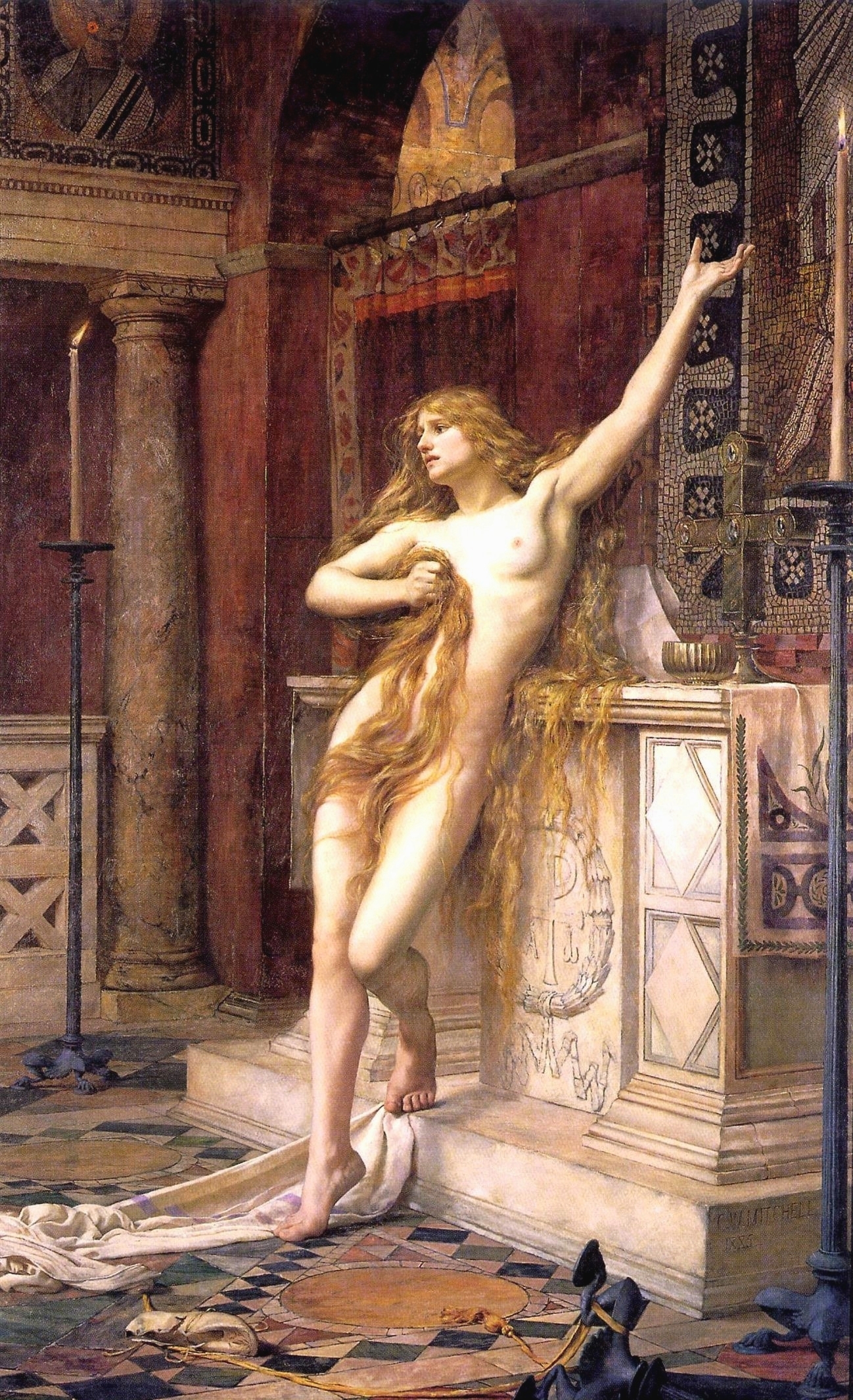
Her killing was real and horrifying, but it has been welded onto the Library’s story by popular culture, above all the 2009 film Agora, which frames her death as the symbolic death of classical learning and its library. The chronology alone breaks the link: the great collection was long gone by 415. Hypatia’s murder belongs to the history of religious politics in late Roman Alexandria, not to the fate of the scrolls.
The Real Killer — Centuries of Neglect
The Library’s true cause of death was money, or the loss of it. Because the Mouseion ran on royal patronage, its slow starvation began the moment the Ptolemies stopped investing. As early as 145 BCE, Ptolemy VIII expelled scholars from Alexandria in a political purge, scattering talent across the Mediterranean. The decline compounded from there.
Under Roman rule the institution limped on, but the recorded roster of Mouseion members thins out and effectively ends in the 260s CE — right before Aurelian’s soldiers finished the job on the buildings. An institution that stops appointing scholars and stops funding acquisitions is already a corpse; the fires and sieges just cremated it. This is the unglamorous truth that no single-arsonist story can hold.
It’s worth remembering how much ancient knowledge vanished this quietly. We only know the Greeks built geared astronomical computers because one survived by accident in a shipwreck — see how the Antikythera mechanism worked. Countless texts didn’t get their lucky shipwreck. They simply stopped being copied once no one was paid to copy them.
How Much Did We Actually Lose?
Honestly, we don’t know — and anyone who gives you a precise figure of “lost knowledge” is guessing. We have no reliable catalog of the Library’s holdings, no inventory of what was unique to it, and no way to measure what a given scroll would have added. Ancient claims of 400,000 or 700,000 “volumes” mix scrolls, duplicates, and rhetorical exaggeration.
What we can say is that Alexandria was never the single point of failure the legend implies. Copies circulated. Scholars migrated to Athens, Pergamon, Rhodes, and later Constantinople, carrying texts and traditions with them. Much of what mattered was preserved precisely because it wasn’t locked in one building. The works of Euclid, Ptolemy, Galen, and others reached us through this dispersed copying network, not through Alexandria’s shelves.
So the popular idea that burning the Library “caused the Dark Ages” or “set science back a thousand years” doesn’t hold up. There was no clean before-and-after. Knowledge was lost gradually across the whole late-antique world as literacy, funding, and copying declined — a process with many causes and no single dramatic villain. If you want more grounded windows into the ancient world beyond the myths, see our Nine Stories from Ancient Egypt.
So Who Destroyed the Library of Alexandria? The Verdict
If forced to name culprits, the evidence points to two working together: Roman military destruction of the Bruchion quarter in the 270s CE, and the centuries of collapsing royal patronage that had already hollowed the institution out. Caesar damaged an outlying stock of scrolls. The Serapeum’s fall in 391 probably involved no library at all. The Caliph Omar story is a medieval fiction.
Drop the search for one arsonist and one bad afternoon. The Library of Alexandria died the way most great institutions die — slowly, from neglect, with the wars only delivering the final blows.
Frequently Asked Questions
Who burned the Library of Alexandria?
No single person did. The image of one great burning is a myth. The Library declined over roughly four centuries, with the most serious physical damage coming from Roman military destruction of Alexandria’s royal quarter in the 270s CE, after funding for the institution had already collapsed.
Did the Library of Alexandria burn down in one fire?
No. There was never one catastrophic fire that destroyed it. Several separate events damaged Alexandria over centuries — Caesar’s harbor fire in 48 BCE, Roman sieges in the 270s and 297 CE, and the demolition of the Serapeum temple in 391 CE — but no single blaze ended the Library.
Did Julius Caesar burn the Library of Alexandria?
Not the Library itself. In 48 BCE a fire Caesar set to the Egyptian fleet spread ashore and likely destroyed scrolls warehoused near the docks. The main Library survived: the geographer Strabo used it around 20 BCE, and scholars kept working there afterward.
Did Christians destroy the Library in 391 CE?
A Christian mob under Bishop Theophilus destroyed the Serapeum temple in 391 CE under an edict of Theodosius I. But no surviving account of that event mentions books or a library, and the temple’s collection had likely dispersed earlier. Blaming the Library’s end on 391 goes beyond the evidence.
Did Caliph Omar or the Muslims destroy the Library in 642 CE?
No. That story first appears in writings from around 1200 CE, about five centuries after the supposed event, with no earlier source. Historians regard it as a myth, likely invented during a later period when Muslim libraries were being sold off, to argue that selling books beat burning them.
Was Hypatia the librarian of the Library of Alexandria?
No. Hypatia was a mathematician and philosopher, the daughter of the scholar Theon, murdered by a mob in 415 CE. She held no post as librarian, and the great collection was gone long before she died. The 2009 film Agora popularized the false link between her death and the Library.
How much knowledge was lost with the Library?
We genuinely don’t know. There’s no reliable catalog of what it held or what was unique to it. Much ancient scholarship survived through copies and scholars who moved to other cities, so the idea that the Library’s loss caused a sudden intellectual dark age isn’t supported.
Who founded the Library of Alexandria?
The early Ptolemies, in the 3rd century BCE. It was part of the Mouseion, a royal research institute in Alexandria, most likely begun under Ptolemy I Soter and substantially developed by his son Ptolemy II Philadelphus.
Sources
- World History Encyclopedia — “Library of Alexandria”: worldhistory.org/Library_of_Alexandria
- Britannica — “The fate of the Library of Alexandria”: britannica.com
- History.com — “Library of Alexandria”: history.com
- History for Atheists — “The Great Myths: The Library of Alexandria”: historyforatheists.com
- National Geographic — “What really happened to the Library of Alexandria?”: nationalgeographic.com
- Bad Ancient — “Did Julius Caesar burn down the Library of Alexandria?”: badancient.com
- Ammianus Marcellinus, Res Gestae 22.16 (Perseus): perseus.tufts.edu